One Month, Zero New Beauty Buys: What My Shelf Actually Taught Me
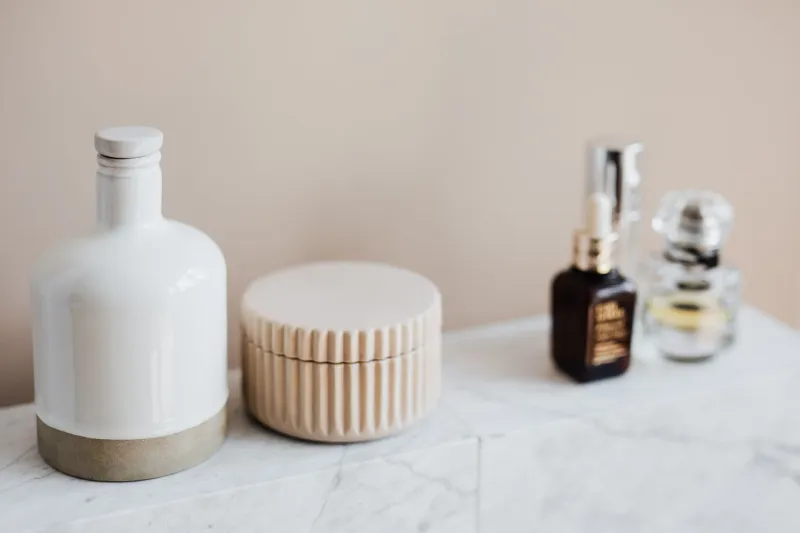
There's a specific sound a bathroom cabinet makes when it's full of things you don't use. A little clink, a little shift, a bottle rolling into a bottle. For a long time I thought that sound meant I was prepared. Then I did the math on how many of those bottles I'd touched in the last two weeks, and the number was embarrassing.
So I set a rule: thirty days, no new beauty buys. Not a replacement mascara, not a travel-size anything, not a "but it's on sale" serum. The only exceptions were boring and non-negotiable — sunscreen if I genuinely ran out, and anything a dermatologist would call medicine rather than styling.
I expected a month of white-knuckling my way past checkout pages. What I got was closer to a personality test.
The Rules I Wrote on a Sticky Note
Half the value of this experiment was in the restrictions, so I'll be specific about mine:
- No replacements. If something ran out, it ran out, and I moved to the next-best thing already in the drawer.
- No samples left unopened. Those little foil packets weren't souvenirs; they were product.
- No buying for a future self. Nothing for a trip I hadn't booked, a wedding I hadn't been invited to, or a hair length I didn't have yet.
- No "just browsing." I stayed out of the beauty aisle entirely, including the one next to the pharmacy counter, because that aisle is a trap with good lighting.
I kept a running note on my phone: what I used, what I reached for twice, what I skipped without noticing.
Week One Is Mostly Bargaining
The first few days were not noble. They were a negotiation. I found myself inventing reasons a purchase was technically not a purchase. My setting spray was almost empty. My brow pencil was down to the nub. Surely a nub doesn't count.
It counted. And here's what I noticed by day four: I wasn't craving new products so much as I was craving the small hit of deciding. Walking into a store and picking something up feels like editing your life. Using what's already there feels like homework.
That's the whole trick, I think. The pleasure was in the choosing, not the thing.
What Actually Got Used
By the end of week two, patterns were obvious. The workhorses were dull and loyal: cleanser, moisturizer, sunscreen, one concealer, one cream blush, a lip balm that lives in my coat pocket. I hit pan on a powder I'd owned for over a year.
The surprise winners were things I'd mentally filed as "fine." A conditioner I'd bought on a whim became the reason I stopped dreading wash day. A little jar of body oil that had been sitting behind the towels turned out to be the difference between a rushed morning and one that felt a shade more deliberate.
What Played Benchwarmer
Then there was the other pile.
An unopened highlighter in a shade I'd describe as "optimistic." Two masks that required a level of planning I simply do not possess on a Tuesday. A lip color so specific it only made sense with one outfit, which itself only made sense in one season.
None of these were bad products. They were bad fits — bought for an idea of my routine rather than the routine I actually have. Which is a gentle way of saying I'd been shopping for my aspirational self and dressing my real self out of leftovers.
The 'Saving It' Problem
I also caught myself saving things. The good perfume, for occasions. The nice hand cream, for after I finished the cheap one. As if my ordinary Wednesday weren't worth the top-shelf stuff.
Thirty days of no new buys quietly killed that habit. When you can't replace something, you stop rationing it. I started using the good hand cream on a random Monday and nothing collapsed.
The Money Math Nobody Wants to Do
I'm not going to pretend I saved a fortune, because I wasn't spending a fortune to begin with. What I actually saved was the small, invisible drip: the $9 add-on, the $14 replacement for a product I already had two of, the $22 "reward" after a hard week.
Added up over a month, it was enough to notice. Added up over a year, it's the difference between a shelf full of clutter and a shelf full of things I'd buy again on purpose.
And that's the real question this challenge keeps asking: would I buy this again, knowing what I know now? If the answer is no, why is it still in my cabinet?
What It Did to My Mornings
Fewer choices made the routine faster, but the more interesting change was that it got more confident. When you're not auditioning a new product every other week, your face stops being a test kitchen. You learn what your five reliable moves actually are, and you get quietly good at them.
That's not a small thing. There's a specific kind of self-assurance that comes from knowing your routine is yours — not borrowed from a haul video, not optimized for a hypothetical event, just calibrated to your actual life.
How to Run Your Own 30 Days
If you want to try this without the drama, keep it simple:
- Photograph the shelf. Flat lay, good light, everything visible. It's your before picture and also your inventory.
- Pull the duplicates forward. Two open bottles of the same thing? Finish one before starting the other. That alone buys you weeks.
- Make a 'next up' basket. When something runs out, you're allowed to shop that basket. No basket, no purchase.
- Track honestly for one week. Not for the whole month — one week tells you almost everything about what you actually use.
- Decide on day 31, not day 12. Give yourself a wish list you can't act on. If you still want it in a month, it's probably a real want.
The Shelf After
I ended the month with a smaller shelf, a shorter routine, and a strange, specific satisfaction I didn't expect — the feeling of finishing things. Of using a product all the way to the end and having an opinion about it.
Did I buy nothing the day the challenge ended? No. I bought a replacement, which is the boring, correct answer. But I bought it from a short list I'd thought about for four weeks instead of four seconds.
If your cabinet makes that little clinking sound when you open it, you probably don't need more. You might just need thirty days of paying attention.