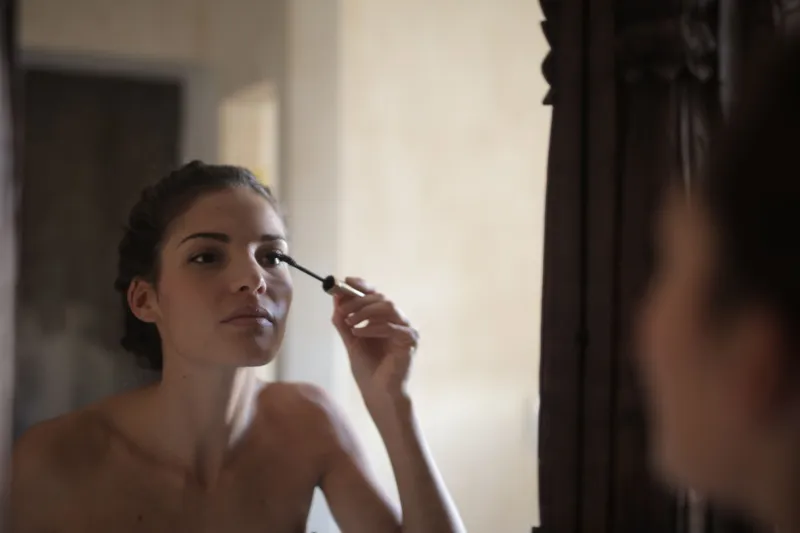
Do Less, Look More Like Yourself: The Case for a 2026 Makeunder
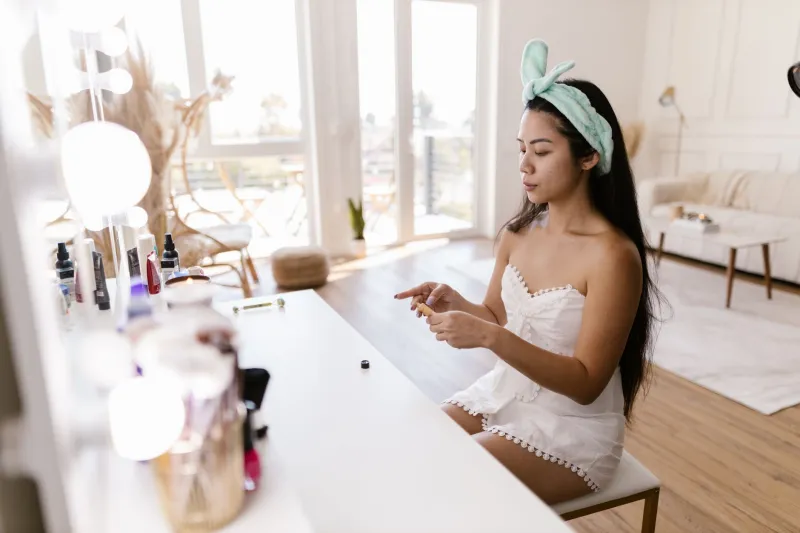
At Zera Self Salon, we like a full face. We also like a full night of sleep, a full bank account, and a full sense of self. That is why the makeunder deserves a better reputation than it has. A makeunder is not anti-beauty. It is the discipline of asking what a step is doing for you — and having the nerve to cut the ones that are not.
In 2026, the beauty conversation is still loud with addition: another serum, another layer, another tool, another twelve-second technique that promises to change your bone structure. But the most confident people I know are not adding. They are editing. They are subtracting the steps that made them feel like a project instead of a person.
The case for subtraction
Confidence is not a product you can layer. It is a relationship with your own face. The more steps you add, the more chances there are for something to feel wrong. The makeunder reduces the number of things that can go wrong. It also reduces the number of things you have to think about before coffee.
This is not a mandate to go bare. If a red lip is your armor, keep the red lip. If a sharp wing makes you feel like you can handle a performance review, keep the wing. The point is not minimalism as an aesthetic. The point is subtraction as agency. You are not doing less because you care less. You are doing less because you have decided what matters.
A stylist I spoke with, who works with editorial and bridal clients in Chicago, put it plainly: 'A makeunder is not about looking undone. It is about looking intentional. When a client removes three steps, her face comes back. The makeup was never the problem. The routine was just too loud.'
That line stuck with me. A loud routine can drown out a face. It can also drown out preference. You stop asking whether you like the way you look and start asking whether you completed the checklist.
What readers are editing
A reader in Portland told me she stopped baking under her eyes after years of doing it on autopilot. She thought the powder was covering a shadow. In photos, it was creating one. 'I looked tired in a way I was not,' she said. She switched to a sheer concealer and a tap of setting powder only where she actually creased. The difference was not dramatic. That was the point.
Another reader in Atlanta said she cut contouring for video calls. 'I was sculpting a face for a camera that was already washing me out,' she said. 'I started using blush higher on my cheeks and a little more lip. I looked more awake, and I felt less like I was doing a costume.'
These are not dramatic makeover stories. They are self-perception stories. The before-and-after is not visible to anyone else. It happens in the mirror, in the car, in the pause before you decide whether to go back and fix something.
The three-step routine audit
If you want to try a makeunder without throwing out your entire vanity, start here.
1. The three-day inventory. For three normal days, write down every product you use and roughly how many minutes it takes. Do not judge yourself. Do not edit yet. Just count the steps you do on autopilot. Most of us have at least three products we use because we always have, not because they are doing anything.
2. The keep, borrow, cut sort. For each step, ask three questions: Does it solve a problem I actually have? Does it last through my real day? Do I feel more like myself with it? If the answer is yes, keep it. If it is for photos, events, or a version of you who only exists on a mood board, borrow it — use it sometimes, not daily. If it fails two questions, cut it for a week.
3. The one-week subtraction. Remove one step, not five. Wear the edited face to work, school pickup, a video call, and the grocery store. Notice whether you reach for the missing step. Notice whether you feel less polished or more present. Notice whether anyone says anything. The last question matters least.
Before and after, minus the drama
My own before was 14 products and 38 minutes. I looked good in the bathroom mirror and a little foreign in the car. My after was seven products and 16 minutes. I looked like me on a good Tuesday. The makeup did not look dramatically different. The difference was the pause before I left the house. I was not scanning for flaws. I was just leaving.
A reader in Milwaukee described a similar shift after she stopped using a full-coverage foundation for daytime. 'I thought everyone would notice my skin,' she said. 'No one noticed anything. I noticed that I stopped checking my face in every window.' That is the quiet power of a makeunder. It gives you back attention.
A makeover can be fun. A makeunder can be free. Not free as in no products, but free as in fewer decisions, fewer corrections, fewer moments where you feel like you are managing a face instead of living in one.
The boldest move of the year
The boldest confidence move of 2026 is not another step. It is the decision to be recognizable. It is trusting that your face does not need to be fixed before it can be seen. It is choosing a routine that leaves room for you.
Try one subtraction this week. Keep the lipstick if it makes you feel powerful. Keep the mascara if it makes you feel awake. Cut the step that makes you feel like you are failing a test you did not sign up for. That is not a retreat from beauty. That is a better relationship with it.